
Lionel Richie: A Musical Legacy

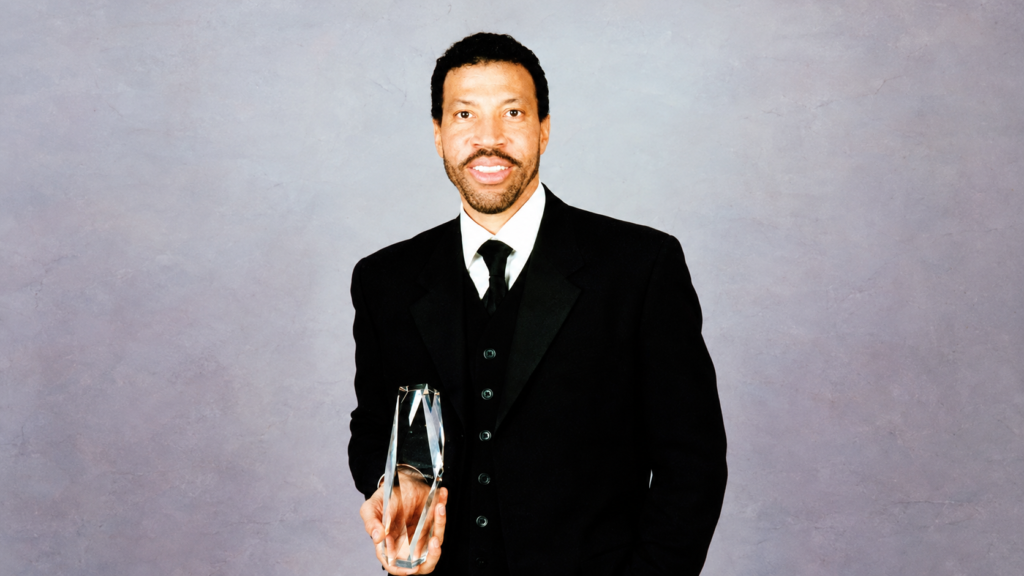
Award-winning musician and composer Lionel Richie was born on June 20, 1949, in Tuskegee (Macon County).The accompanying image shows Richie in 1997 with his award for being inducted into the Alabama Music Hall of Fame. Twelve years earlier, his band, The Commodores, had been inducted as well.While enrolled as a student at Tuskegee University, Richie joined a musical trio called The Mystics. The group played local proms and dances; it merged with another local group called The Jays in 1968.Using a dictionary to choose a new name, the members came up with The Commodores, based on the old naval term for the rank between captain and admiral.The Commodores’ first studio recording took place in New York in February 1969. The group’s first hit was “Machine Gun,” which was released on their debut album Machine Gun in 1974. The group achieved considerable commercial success with love ballads written and sung by Richie.These songs included the number one R&B singles “Slippery When Wet” (1975), “Just to Be Close to You” (1976), and “Easy” (1977), and the number one U.S. Billboard magazine Hot 100 and R&B hits “Three Times a Lady” (1978) and “Still” (1979).In 1980, Richie wrote and produced “Lady” for country singer Kenny Rogers; the song was a Billboard magazine number one for six weeks and remains one of Rogers’ most popular hits. The following year, Richie wrote and recorded (with Diana Ross) the title song for the film Endless Love.One of Motown Records’ best-selling singles, it earned Richie an Academy …

Award-winning musician and composer Lionel Richie was born on June 20, 1949, in Tuskegee (Macon County).

The accompanying image shows Richie in 1997 with his award for being inducted into the Alabama Music Hall of Fame. Twelve years earlier, his band, The Commodores, had been inducted as well.

While enrolled as a student at Tuskegee University, Richie joined a musical trio called The Mystics. The group played local proms and dances; it merged with another local group called The Jays in 1968.

Using a dictionary to choose a new name, the members came up with The Commodores, based on the old naval term for the rank between captain and admiral.

The Commodores’ first studio recording took place in New York in February 1969. The group’s first hit was “Machine Gun,” which was released on their debut album Machine Gun in 1974. The group achieved considerable commercial success with love ballads written and sung by Richie.

These songs included the number one R&B singles “Slippery When Wet” (1975), “Just to Be Close to You” (1976), and “Easy” (1977), and the number one U.S. Billboard magazine Hot 100 and R&B hits “Three Times a Lady” (1978) and “Still” (1979).

In 1980, Richie wrote and produced “Lady” for country singer Kenny Rogers; the song was a Billboard magazine number one for six weeks and remains one of Rogers’ most popular hits. The following year, Richie wrote and recorded (with Diana Ross) the title song for the film Endless Love.

One of Motown Records’ best-selling singles, it earned Richie an Academy Award nomination, five Grammy nominations, an American Music Award, and a People’s Choice Award.

In 1986, Richie and pop star Michael Jackson wrote “We Are the World,” which raised millions of dollars for famine relief and earned five Grammy awards.

That same year, Richie won an Oscar for his song, “Say You, Say Me,” for the film White Nights, starring Gregory Hines and Mikhail Baryshnikov; he was also nominated that year for the song “Miss Celie’s Blues” from the film The Color Purple.

Photograph courtesy of the Alabama Music Hall of Fame.

Read the Encyclopedia of Alabama article on Lionel Richie.

Author: Encyclopedia of Alabama

Share this article

Facebook
X
WhatsApp
LinkedIn
Email
Keep in touch with our news & offers

Subscribe to Our Newsletter

What to listen next...

Comments

Leave a Reply

Your email address will not be published. Required fields are marked *